Campwich Forest grounds: location for the Monthly Mobile User Group (MMUG)
The following notes were taken from the Thursday, March 26th 2026 Monthly Mobile User Group (MMUG) meeting. These notes should not be taken as a full transcript of the meeting, which was largely held in Voice, but rather a summary of the key topics discussed.
The meeting was recorded by Pantera, and her video is embedded at the end of this summary – my thanks, as always to her in providing it.
The Mobile User Group provides a platform to share insights on recent mobile updates and upcoming features, and to receive feedback directly from users.
These meetings are conducted (as a rule):
The last Thursday of every month at 12:00 noon SLT.
Meetings are open to anyone with a concern / interest in the above topics, and form one of a series of regular / semi-regular User Group meetings conducted by Linden Lab.
Dates and times of all current meetings can be found on the Second Life Public Calendar, and descriptions of meetings are defined on the SL wiki.
SL Mobile (Beta) version 2026.2.1086 (A) / 0.1.1084 (iOS) – March 20 – New User chatbot; support for Portuguese in app UI.
Recent Updates
Several releases through the latter part of February and in March.
Key new feature: new user chatbot – Prima Linden.
On sign-up via Mobile incoming new users had been receiving a non-interactive welcome message from Prima Linden.
With the upgrade to a full chatbot, Prima will now respond to, and attempt to engage with, new users and answer questions.
This is something of a follow-on project from work done on Project Zero to provide new users with chatbot assistance. As such, there is still more work to do in tuning the chatbot for Mobile users.
Feedback on the updated Pima Linde is being sought (e.g. via the Discord channel).
Further work on language support within the App with the addition of UI support for Portuguese to cater for SL’s large population based in Brazil (as well as supporting other Portuguese speaking countries).
Language changes can be accessed via Menu → Settings → General → Language.
This is the first step to supporting the same languages as support by the Desktop viewer.
In-app update notifications for Android when new releases are made.
A big push on Mobile App stability on Android (hence Android version numbering being ahead of iOS).
Upcoming Updates
WebRTC Voice usability improvements, e.g. reducing the new of steps to enabling Voice on Mobile.
These improvements are already available on the closed Alpha programme, and will be coming Soon to the open Beta.
Localisation language improvements (e.g. the App detecting the default language used on a user’s device, and if different to that used within Mobile, ask the user if they would prefer to switch to using the device language selection, as well as support for additional languages.
Improvements to Chat history, making it viewable cross-platform (e.g. Desktop and Mobile, or different Mobile devices, etc.).
General Q&A
Question on why more existing users haven’t come over to Mobile.
Potentially because most existing users are comfortable with the Desktop viewer which, in comparison with Mobile, offers easier accessibility to features and settings and obviously currently have a wider, deeper range of capabilities and features (e.g. inventory, building, ease of camming, etc.).
Keyboard access to Desktop tends to be far more convenient to many that touch-typing on a small screen.
Much easier to tab between SL and other applications running on a PC than on Mobile, which can sometimes freeze during switching, etc.
Mobile might be more popular to some if more of a “companion app” than alternate (e.g. being able to use it alongside of the Desktop viewer when going AFK for a few minutes and still be able to monitor chat, hear Voice, respond, etc).
Question on what people think is the “top” feature Mobile is currently missing that is keeping Desktop users from trying Mobile (highly subjective – and acknowledged as such):
Responses included: Inventory access; better appearance tools; ability to interact with objects via llDialog and dialogue boxes / menus (which is being worked on, per my February meeting summary); lack of suitable hardware (not really a Mobile issue).
A follow-up discussion on how people would prefer to see Mobile develop – such as a focus on a single feature, and how should it be presented.
For example: a focus of inventory would likely be beneficial, but releasing it in a manner where it can be seen but not fully manipulated could be seen as pointless, but releasing it in a manner to match inventory on Desktop could be a major investment in terms of time required to bring it to fruition and release it).
Even so, Inventory remained the popular choice.
LL are planning to survey incoming new users on Mobile to get their feedback on the App as well.
A user question on testing – does LL use VPNs, etc., to simulate logging-in from different parts of the world. Answer: yes, this is done, plus the team is somewhat international – Adm Sinewave (lead Mobile developer), for example, is based in Australia.
Ridewood Enclave Commercial DistrictsNote: this is somewhat late in getting published, for two reasons: the first is that for the first several days after being announced the regions in question appeared to have accessibility issues (when visible, my attempts to walk or TP into them from neighbouring regions met with something like: You are not allowed to access this region), plus they spent much of those first few days as water voids and off-line (see here for the status reports). The second reason being my uppy-downy health, which has not been particularly good for the past couple of weeks. Anyway, for whatever it might be worth, here’s my look at the new(ish) Ridgewood Enclave Commercial Districts.
One of the things many have asked for with the arrival of the Belliseria continent and its associated Linden Homes, is for commercial districts. It’s an idea that has always been responded to fairly positively by those in charge of Bellisseria developments, and on Tuesday, March 17th, the wish was finally granted with the opening of a number of commercial districts within the Ridgewood Enclave (a Linden home theme I wrote about in September of 2025).
The new districts – at the time of writing, 11 in total – span a number of regions scattered across Ridgewood Enclave. They have been somewhat integrated into the surrounding residential regions thanks to both open road access and an architectural styling somewhat in keeping with the surrounding homes.
Ridewood Enclave Commercial Districts
General Notes on the Commercial Districts
Store Styles
In all, seven store styles are offered: Cityview, Vault, Edgeworks, Bridgecrest, Seamstone, Overlook, and Gridline.
All seven occupy a 1024 sq metre parcel, and are available as either a square unit 32 metres on a side or a rectangular unit, 64 metres long by 16 metres wide, giving a total of 14 variations.
All of the stores are permanent structures; there is no ability to switch from one style to another within a parcel, as with Linden Homes.
All of the units come with both internal and external control panels, allowing the unit holder to set the broad décor of their store (e.g. colour scheme, decorative elements)inside and out.
The control panels can also be used to set access rights for those a merchant may wish to nominate in helping to run their store.
Unit holders can add their own lighting and décor items, or can use those provided in the Content Kit available for each unit.
Each store is for the exclusive use by the person claiming it, and there is no tier or other rental involved.
Stores cannot in whole or in part form a residential building, and cannot have security devices such as orbs functioning within their parcels.
The Commercial Districts have a dedicated covenant, and those seeking to hold a store are advised to read this in advance, as it has specific statements regarding signage and décor outside commercial buildings, as well as the provisions that apply to residential property in Bellisseria.
Ridewood Enclave Commercial Districts
Availability
All stores in the Ridgewood Enclave Commercial Districts are available for use by Premium Plus subscribers who operate as content creators / merchants only (e.g. Premium and Plus subscribers cannot claim one).
Only one store can be claimed by an individual.
Available parcels are marked with a sign that says – wait for it – “Available”. Clicking the sign initiates the process to gain ownership.
Stores can be abandoned completely or in favour of other available store units elsewhere in the Commercial Districts.
General Observations
The following is obviously limited as I’m not Premium Plus and don’t currently sell anything, so I cannot speak to things like the content pack, décor options and the like. My observations are therefore obviously limited to general appearance, region facilities, etc.
In terms of looks, the Commercial Districts have a Floridian feel to them – at least to me, as their open spaces, clumps of stores, palm trees and wide roads called to mind trips to Orlando, Miami and Tampa on first seeing them (with LA running a close second). The store designs are minimalist, shall we say, bordering on brutalist in their exterior looks.
A nice touch is that the regions are not cookie-cutter: a single layout of stores plonked across the nominated locations. Rather, there is a selection of layouts used by the various regions. Highlight and Sidewall, as two examples of this, have reflecting pool-like water features; meanwhile, Yellow Brick and Downbeat are two examples of the style with a central open space with a water feature/island. An additional, interesting, if hard to see element in the building designs is the rooftop gardens covering many. I have no idea if these are accessible or not, but they do add a certain touch when seen from the air.
Ridewood Enclave Commercial Districts
All of the region designs include rezzing zones, car parking, planters with flowers and shrubs to add colour, while maps of the growing mismatched splurge of Bellisseria (which when seen from the Map is both ugly and so painfully artificial / haphazard compared to the more traditional continents) and bus stops where information on the Commercial Districts can be found. Confusingly, the Map displays often appear with an “Information” sign – although none is given when touched.
There has been some controversy over the new Commercial Districts, with claims that people are taking stores and leaving them empty, or that “big brands” are claiming stores as advertising space for their main stores, and that both are thus “denying” stories to “small brands”.
Exactly how you can tell if a store is being intentionally left empty this early in proceedings, rather than the holder being slow to move into it, is beyond me (of course, if the store is still empty in another 2-3 weeks, then there is likely merit in the claim). As to the second claim, I simply don’t see the issue. If a large brand owner is Premium Plus and wishes to run a satellite store via Ridgewood Hills, that’s – frankly – their choice, same as it is for any Premium Plus small brand owner. And if they want to use part of their space advertising their main store – again, that is their choice.
Ridgewood Enclave Commercial Districts
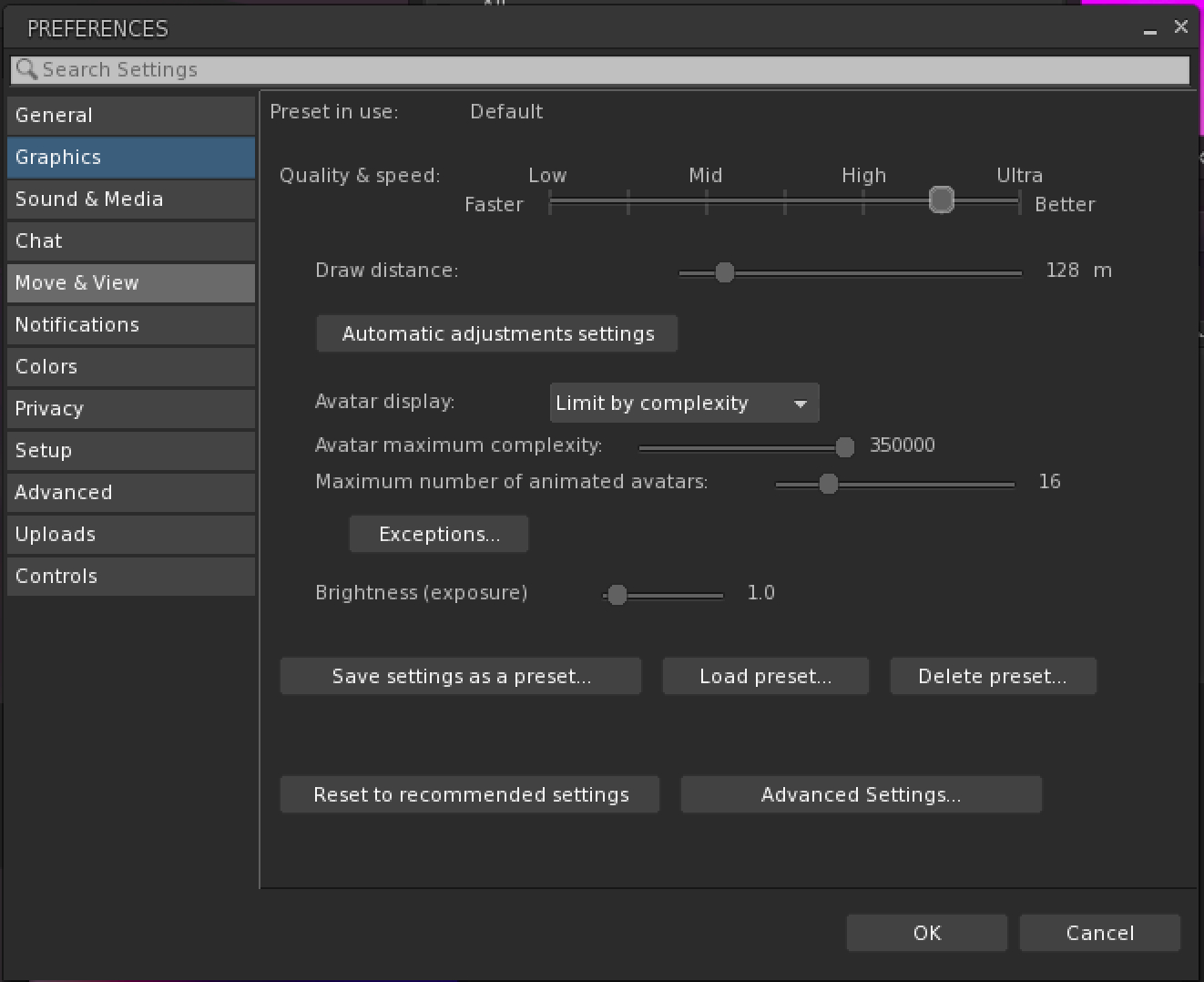
My one warning with these districts is viewer performance. Obviously, these are locations with a lot of unique textures (vendor boards and such like), so if you tend to wander around SL with a moderate-to-high draw distance, you’re going to be making your viewer request a lot of these textures whether or not you actually see them, and that’s going to pull down your overall experience. If you have things like shadows enabled, then expect an even heavier hit. So be prepared to make some adjustments in your viewer with visiting these districts.
On the whole, one of the more interesting developments for Bellisseria – although just over a week into the offering, one that doesn’t seem to be gathering high volumes of footfall. It’ll be interesting to see how this goes, and whether similar, themed commercial offerings emerge elsewhere within Bellisseria’s patchwork landmass.
IMAGO Art Gallery, March 2026: Art Mysterious – Soul
It is possible that Art Mysterious might be best known for his avatar profile pictures, high-quality, professionally produced and processed images suitable for display in people’s Second Life profiles, together with his landscape photography, also taken in Second Life, which is captivating for a variety of reasons – including subject, angle, use of depth of field, colour processing and more.
However, Art’s work extends far beyond these two aspects, encompassing line drawing, experimentation, real-life portraiture. Using his skills as a graphics artist, Art strives to blur the line between our digital realm in Second Life and the real world, presenting a gateway into a world of art in which graphical art and virtual spaces are combined to offer images of deep emotional content and power.
This is very much in evidence within his work as a portrait artist, whether working directly with photographs taken in-world or when bringing avatars to life through his unique avatar drawings. The latter are striking for the manner in which he strives to move beyond mere hand-drawn reproductions of images captured in-world, but seeks to reveal the inner nuances of the avatar as manipulated by the avatar’s owner; to give a suggestion of the avatar as a part of the life that sits behind the screen.
An avatar is no less “real” than a face from the physical world. It represents identity, presence, emotion, and memory within a digital space that is just as authentic for those who inhabit it. Creating an avatar drawing requires the same level of attention to detail, the same artistic interpretation, and the same responsibility to capture the subject’s essence as a real-life portrait.
– Art Mysterious on creating avatar drawings
IMAGO Art Gallery, March 2026: Art Mysterious – Soul
Within Soul, an exhibition hosted by Mareea Farrasco at her relocated Imago Art Gallery, Art presents another aspect of his work: that of an experimentalist, bringing together multiple approaches to art which take a raw drawing produced by Art, exposes it to various techniques an tools to provide a completed image, which is then displayed with the original drawing.
Starting from the initial hand-drawn sketch, Art Mysterious used modern technology and artificial intelligence to transform and regenerate the images into final ink drawings, preserving the original concept, composition, and expression. The process became a continuity between the traditional gesture and digital means, where the core idea remained unchanged, but the form was reinterpreted through contemporary tools.
– From the Artists’ description of the major pieces in Soul
IMAGO Art Gallery, March 2026: Art Mysterious – Soul
The result is a truly stunning series of images, each with its own title, several bordering on the surreal, others offering literary (and cinematic) allusions. All are rich in detail, with the more surreal pieces – AEIOU, Spirit, Core and Clone on the lower floor of the gallery – offering such a richness of imagery and potential interpretation that I’m not even going to try to offer thoughts into them, as doing so would simply spoil the experience first-hand; these are pieces which need to be experienced without any intervening filters of thought.
Similarly the more allusory are gorgeous in their presentation of ideas and their referencing culture, literature and even the human condition – The Lost Raven (quite possibly my favourite in the exhibition, given it Poe-like references), Addiction and Schizophrenia quite powerfully so.
Also to be found in the exhibition is a smaller display of Art’s beautifully engaging line art, offered for sale under the title Transylvania Collection, and which is itself captivating.
IMAGO Art Gallery, March 2026: Art Mysterious – Soul
Very much an exhibition to be both seen and absorbed – and don’t forget the video “audiobook” accompanying the exhibition.
Logos representative only and should not be seen as an endorsement / preference / recommendation
Updates from the week through to Sunday, March 22nd, 2026
This summary is generally published every Monday, and is a list of SL viewer / client releases (official and TPV) made during the previous week. When reading it, please note:
It is based on my Current Viewer Releases Page, a list of all Second Life viewers and clients that are in popular use (and of which I am aware), and which are recognised as adhering to the TPV Policy.
This page includes comprehensive links to download pages, blog notes, release notes, etc., as well as links to any / all reviews of specific viewers / clients made within this blog.
By its nature, this summary presented here will always be in arrears, please refer to the Current Viewer Release Page for more up-to-date information.
Outside of the Official viewer, and as a rule, alpha / beta / nightly or release candidate viewer builds are not included; although on occasions, exceptions might be made.
Official LL Viewers
Default viewer – Legacy search; WebRTC improvements; QoL improvements – 26.1.0.22641522367 – March 12.
Second Life Project Viewers:
Second Life Project Flat UI – 26.2.0.22829286351, March 20 -“flat” UI and font updates.
Second Life One Click Install viewer 26.1.0.21295806042, January 26 – one-click viewer installation.
Second Life Voice Moderation viewer 26.1.0.20139269477, December 12, 2025 – Introduces the ability to moderate spatial voice chat in regions configured to use webRTC voice.
The Artemis 2 SLS and Orion MPCV depart the Vehicle Assembly Bulding at Kennedy Space Centre on March 20th (UTC), heading back out to the pad for a potential launch on April 1st, 2026. Credit: Terry Renna / Associated Press
The Space Launch System (SLS) which will launch a crew of four on a trip around the Moon aboard their Orion Multi-Purpose Crew Vehicle (MPCV) during the Artemis 2 mission, has returned to the launch pad at Kennedy Space Centre’s Launch complex 39B (LC-39B).
The rocket had to be returned to the Vehicle Assembly Building on February 25th, 2026 after a helium pressurisation issue was found in the rocket’s upper Interim Cryogenic Propulsion Stage (ICPS), resulting in a helium leak. While the leak could be resolved with the vehicle on the pad, the need to ensure the ICPS has a stable helium pressure flow when in operation called for a rollback to the VAB to allow engineers unfettered access to the upper stage in order to resolve the problem.
The second roll-out to the pad mirrored the preparations for the Artemis 1 uncrewed mission in late 2022, which also saw the SLS rocket used on that flight rolled out to the pad, encounter issues (with the main propellant feed mechanism intended to fill the rocket’s tanks with liquid hydrogen and liquid oxygen) then rolled back to the VAB, before a second roll-out to the launch vehicle back to the pad. Given the overall success of Artemis 1 (despite leading to concerns over the Orion capsule’s heat shield), the roll-out, rollback, roll-back of Artemis 2 might be seen as a good (if delaying) omen.
A close-up of the Orion MPCV encased within its Launch Abort System (LAS) shroud, the LAS motor visible on the tower above it, and the European service Module (ESM) directly below the capsule’s “dome” protected by its pair of white payload fairings. Credit: Terry Renna / Associated Press
The second roll-out took place overnight on March 20th, 2026 UTC (March 19th – 20th, US EDT) with the rocket and its Mobile Launch Platform (MLP) inching away from the confines of the VAB atop one of NASA’s mighty Crawler-Transporters. The 6.4 kilometre journey to the pad took almost 12 hours to complete, with the SLS and MLP positioned on the pad at around 15:20 UTC on March 20th.
The next launch window for the mission opens on April 1st, 2026 and runs through the first few days of April. NASA is currently targeting the very opening of the launch window on April 1st for a launch attempt, giving them maximum leeway should any minor issues occur or the weather decides to play a hand in matters.
An infographic produced by L3Harris, an Artemis contractor, highlighting features of the Artemis 2 mission, including the on-orbit rendezvous and docking simulations the crew will perform using the SLS ICPS as a dummy target, and the fact the flight will be a last hurrah for NASA’s most reliable Space Shuttle Main Engine, having flown 15 previous times. Credit: L3Harris
Once launched, Artemis 2 will initially enter a 24-hour orbit around Earth. During this time several critical systems not carried aboard Artemis 1 will be tested and checked. Additionally the ICPS will be used to lift Orion into an elliptical orbit with a high apogee whilst imparting the craft with much of the velocity it will need to head for the Moon.
The ICPS will then separate from Orion and its European Service Module (ESM) and become a passive dummy target for the crew on Orion to carryout mock rendezvous and docking manoeuvres of the kind Orion will have to perform when operating around the Moon in future missions in order to dock with the lunar landing vehicles and (later) Gateway station.
Once these tests have been completed, Orion will use the ESM’s min motor to push it into a free return trajectory around the Moon on a trip lasting 9-10 days, affording the crew time to thoroughly check-out Orion’s systems and amenities.
One of these changes was the cancellation of the planned Exploration Upper Stage (EUS) the more powerful upper stage for the SLS that has been under development at Boeing for several years, and would replace the ICPS on mission from around Artemis 5 (now Artemis 6).
ULA”s Interim Cryogenic Propulsion Stage (ICPS) for the SLS rocket, now set to be replaced in the future by ULA’s Centaur V. Credit: ULA
At the time of the announcement no indication was given as to what would be used to replace the EUS and ICPS, or whether NASA was looking at something to match the ICPS or EUS in capabilities. However, in my article linked to above, I noted that as far as I could see, there were only two possible contenders: Blue Origin, with their New Glenn upper stage, or United Launch Alliance (ULA) with their Vulcan-Centaur V upper stage, part of a family of Centaur upper stages that has gained a long and venerable operational history.
On March 10th, 2026 NASA confirmed my thinking by making a procurement filing to replace the ICPS and EUS with ULA’s Vulcan-Centaur V. Whilst some modifications to the stage will be required, the V-C 5 was selected by NASA in part because of its pedigree stretching back over 60 years (which was seen as overcoming the fact the Centaur V has itself only flown twice), and in part because it is almost a simple drop-in replacement for EUS and (particularly) ICPS.
The first Centaur V (officially designated the Vulcan-Centaur V) to roll off of ULA’s production line, and used in ULA’s first Vulcan-Centaur rocket launch. Credit: Tony Burno (former CEO of ULA)
Once upgraded, the V-C 5 will offer more-or-less the same capabilities as ICPS, but not as great as the EUS. However, the lineage of Centaur means NASA has an assured route to have the system upgraded to meet future needs, if required.
The NASA announcement also indicated that, per my theorising, they had also considered the Blue Origin New Glenn upper stage. This was only ruled out on the basis it has only flown twice thus far – albeit completely successfully on both occasions – and NASA wanted an upper stage replacement will a decent launch / success / failure history and a track record of development they could properly evaluate.
ULA’s established infrastructure, resources, flight history, existing cross-program integration, and human-rating familiarity with the Centaur upper stage represents the only currently viable opportunity for the Government to accomplish Artemis mission objectives and requirements while also maintaining the agency’s programmatic goals.
– From the NASA procurement filing
So, yay me for calling it.
Artemis Accord Signatories Mull How to Deal with Emergencies and More
When a single nation goes to the Moon, there’s a pretty narrow field of operational requirements that need to be dealt with to keep people safe, avoid misunderstandings, demote working areas, and in handling thing like emergency situations.
When multiple nations decide to not only head for the Moon, but head for the same part of the Moon – in this case the South Polar Region – such requirements get a lot more complicated.
Currently, there are two confirmed groups of nations participating in projects aimed towards a long-term human presence within the Moon’s SPR – those of the US-led Artemis Accords (numbering, at the time of writing, 61 nations – not all of whom will be seeking to send their own astronauts to the Moon) and the China and (nominally) Russian-led International Lunar Research Station (ILRS), comprising (at the time of writing) 13 nations.
As such, serious considerations need to be given to managing diverse (or even competitive) lunar operations, denoting separate research and work environments, establishing buffer zone between different interests and working areas, and – critically – how to handle emergencies and provide emergency support.
The latter is something very much up in the air – although one would hope any emergency call for assistance would be responded to without regard to the nationality or allegiance of those making the call. For the former – the establishment of buffer zones is seen by members of the Artemis Accords as the way to go, although they prefer the term “safety zones”.
These would, in theory, allow signatory states pursue their own specific research interests on the Moon without the risk unintentional (or even intentional) interference from other member states. The problem is, how should a “safety zone” be defined? Should limits be placed on the size of such zones? How should they be recognised? How lawful would they be? How can they be enforced when it comes to non-Artemis nations?
A major concern here is that of territorialism: member states (or even the Artemis project as a whole) laying claim to a large area of the Moon, or even an entire region. Such claims are explicitly outlawed under the 1967 Space Treaty, but if sufficient resources of a valuable nature are found in a particular area of the Moon, is that treaty enough to stop a nation establishing a presence there and declaring an exclusionary “safe zone” around it before hoisting their flag and treating it as a national enclave? And what sort of response should that garner if it did happen?
We’re a long way away from where these issues might start to become problems, but they do need to be addressed in some form – and not just by members of the Artemis Accords – but by all nations, whether or not they are signatories to the Accords or the ILRS.
Lunar Ice Might be Rarer than Thought
One of the reasons for the interest in sending humans to the lunar South Polar Region has been the fact that the region is heavily cratered, and due to their position, many of the bottoms of these craters never see daylight or feel the Sun’s heat. Referred to as permanently shadowed regions (PSRs) it has been theorised that these craters could be home to large, accessible (or at least semi-accessible) deposits of the Moon’s water ice – which would be enormously beneficial to human operations on the Moon if they could be exploited.
This idea is backed-up by PSRs elsewhere in the solar system being home o water ice, including the planet mercury and the asteroid Ceres, to name two examples. However, despite all our orbital observations of the Moon, confirming the presence of water ice in lunar PSRs has been difficult; not least because of the orbital complexities involved in get a satellite to overfly them and the fact they are very deeply shadowed when seen form orbit.
To try to understand just how much ice might be present in the bottoms of permanently shadowed craters on the Moon, a team of US researchers operating out of the University of Hawaii at Manoa developed ShadowCam, an imaging system 200 times more light-sensitive than most other cameras used to study and map the Moon from orbit.
ShadowCam forms a part of the payload flown aboard the Korea Pathfinder Lunar Orbiter Danuri, South Korea’s first lunar mission, which entered orbit around the Moon in December 2022. Classified as a NASA experiment, ShadowCam first flexed its muscles in mid-2023, demonstrating it raw ability to see in to PSRs and reveal never-before-seen details.
A computer rendering of the 678 kg Danuri (Korea Pathfinder Lunar Orbiter), which hosts the ShadowCam imaging system. Credit: South Korea Ministry of Science and ICT
More recently, ShadowCam has been engaged in a campaign to image multiple PSRs in the Moon’s Polar Regions (north and south) to reveal more of their secrets. And while the campaign has been very successful in providing new data and information on the observed craters, the one thing it hasn’t found is any sign of water ice deposits.
To be clear, any water ice contained within lunar craters is not going to be pure. It’s going to be mixed with and even covered by a layer of lunar regolith (the loose dust and rock fragments making up the surface material of the Moon). As such, these mixtures would produce different levels of reflectance and light scattering depending on the regolith-to-ice ratios encountered, although astronomers work on the basis that a mixture that is around 20-30% water ice would be enough to be detected by a sensitive-enough imaging system – and as noted, ShadowCam is very sensitive.
A selection of ShadowCam images of lunar North Pole and south Pole PSRs, with features and details the system has revealed for the first time – although none of them show any indication of water ice within the craters. Credit: Nasa / University of Hawaii
However, none of the dozens of PSRs on the Moon imaged by the instrument showed any signature that might indicate water ice was present in some degree. This doesn’t necessarily mean the water ice is not there; it could exist in percentages as low as 10%, or even in single digits – as these are levels too small for ShadowCam to currently detect, although the University of Hawaii team hope to be able to use software updates in their processing software that would reveal water ice in concentrations as low as 1%.
But that said, the real rub here is that even if such low percentages of water ice are revealed, and assuming ShadowCam’s results hold as more lunar PSRs are examined, then it is obvious that the hoped-for abundance of water ice to assist in lunar operations simply don’t exist or might be so small as to not be worth the expense and effort in trying to exploit them. As such, the water needed to help sustain human operations on the Moon and to enable various construction and technology options is going to become a further payload mass that will have to be routinely shipped from Earth.
Hippotropolis Theatre: home of the OSD/TPVD meeting
The following notes were taken from:
Pantera’s video (embedded at the end of this article) and my chat log of the Open-Source Developer (OSD) meeting held on Friday, March 20th, 2026, together with my chat log of that meeting.
Please note that this is not a full transcript of the meeting but a summary of key topics.
The OSD meeting is a combining of the former Third Party Viewer Developer meeting and the Open Source Development meeting. It is open discussion of Second Life development, including but not limited to open source contributions, third-party viewer development and policy, and current open source programs.
This meeting is generally held twice a month on a Friday, at 13:00 SLT at the Hippotropolis Theatre and is generally text chat only.
Second Life One Click Install viewer 26.1.0.21295806042, January 26 – one-click viewer installation.
Second Life Voice Moderation viewer 26.1.0.20139269477, December 12, 2025 – Introduces the ability to moderate spatial voice chat in regions configured to use webRTC voice.
Remains the current viewer development focus, with a beta (RC) update targeting a potential availability in week #13 (week commencing Monday, March 23rd). Actual promotion to release status depends on how long the viewer may ned to remain at RC status.
There is one major blocker to promotion, which is being worked on, but otherwise, it is “very close” to being a candidate for release, user feedback allowing.
Geenz Linden noted that the repo for the viewer is getting updates to more easily ship updates for those TPVs opting to adopt Velopack as their updater.
Velopack benefits:
The move to Velopack allows LL and TPVs to move off from VVM with the exception of cohort management, and allows LL to discontinue the old SLVersionChecker all of which should streamline the viewer install and update processes as experienced by users.
Velopack also opens the door to partial viewer updates – although LL are still in internal discussions on when to actually start doing this.
A side effect of this viewer, when generally available, is that it will not automatically uninstall versions of the viewer using the old install / update processes, and there will be no requirement to manually uninstall such versions (although users can if they wish). The reason for this latter point is a concern that inexperienced users will simply click YES when asked if they wish to remove all their settings, etc., and thus lose them.
Testing of this viewer against incoming new users to SL saw a “not insignificant” increase in day 1 user retention..
Viewer 2026.02 – “Flat” UI and Splash Screen Refresh
An alpha version (see viewer status, above) was released on Friday, March 20th, but without the log-in splash screen updates. These will be in an upcoming update.
This viewer includes the “flat” UI design, font updates and WebRTC voice moderation capabilities to help align viewer-side WebRTC updates more with the server-side.
Example of the upcoming flat UI. Via: Geenz Linden / Github #4681/2
Viewer 2026.03 – Maintenance Release
2026.03 will now see the return of official viewer maintenance releases, with the initial focus on viewer performance improvements, together with a focus on top crashers and regressions, up to a certain limit, so they can be kept as relatively small releases rolled out on a reasonably fast basis.
2026.03 should see (partial list):
A backporting of the texture streaming changes at the very least, with Geenz particularly focused on getting lower RAM usage in general.
Geenz also hopes to get some work done on lightening the main thread burden in the viewer – which is potentially more difficult, and may take longer.
A hope with this cycle of maintenance releases is to put a reasonable dent in some of the debt we’ve accumulated with PBR’s release.
Viewer 2024.04 – SLVP or LUA (TBD)
The 2026.04 viewer release is liable to be either the Second Life Visual Polish (SLVP) release (containing all of the SSR, PBR Specular, and HDR EEP parameters work), or a SLua release.
Work on improving mirrors for SLVP is currently on hold whilst 2026.01.01 and 2026.02 is on the table.
SLVP is liable to spend a long time at alpha status (which may be why SLua moves ahead of it in the order of things).
WebRTC Deployment
This commenced on Wednesday, March 18th, with a deployment to the BlueSteel RC channel covering approximately 3.4% of the grid.
This early release allows us to verify performance, stability, and compatibility in real-world conditions before expanding further.
Users in the release candidate channel may experience:
Failure of peer-to-peer (P2) Voice calls between regions on WebRTC and the rest of the grid. These will not be fully resolved until WebRTC is grid-wide.
Differences in audio quality depending on being in or out of the release candidate channel.
Ongoing tuning and iteration as we gather feedback.
The next, larger deployment is currently scheduled for week #14 (commencing Monday, March 30th). However, a smaller deployment might be made in week #13.
There are thoughts being given to next steps for WebRTC: transcription, the ability in-preferences to hear how you sound, etc. (a replacement for echo canyon), but these are subject to other priorities.
The existing Vivox Voice service is liable to be shut down “a few months” after the WebRTC deployment has been completed. However, no target date has as yet been decided.
During the deployment phase, Vivox, users on the latter will not have spatial Voice when in WebRTC regions, although they should have p2p/conference/group voice with others on Vivox regions.
General Discussion
Mesh Convex Hulls:
The new physics choice for mesh uploads is currently available on ARM Macs, and on the “to do” list for other viewers.
Geenz’s first choice for the role choked on a lot of content for SL, so VHACD is the choice of libraries.
As has been previously mentioned, the aim is to remove the Havok sub-libraries from the viewer entirely – but this a process several steps down the line.
There was a general discussion on performance, lightening the load on the viewer’s main processing thread (some noted above).





 Inara Pey: Living in a Modemworld